
A falling tree creates pressure waves whether anyone hears them. If “sound” means the conscious experience of hearing, there is no heard sound without a listener. The riddle turns on those two meanings. It does not show that human consciousness creates physical reality.
If a tree falls in a forest and no one is around to hear it, does it make a sound?
The useful answer is therefore two-part: measurable vibrations occur without an audience, while auditory experience requires a hearing system. The rest of the article asks what that distinction can and cannot tell us about perception, meaning and attention.
But hold on.
The question is often linked to George Berkeley's eighteenth-century idealism, although the familiar tree wording is not a quotation from him. Berkeley's argument concerns what it means for sensible objects to exist, not a modern acoustics experiment.
And weirdly enough, it's more relevant today than ever before. Because in our social media age where everything is performed for an audience, this ancient riddle has become our lived experience: If you did something amazing but no one saw it, did it really happen?
Let's dig in.
The Problem With Sound (It's Not What You Think)
Here's where this gets interesting.
The entire "if a tree falls in the forest" debate hinges on one sneaky little word: sound.
See, "sound" can mean two completely different things:
- Physical vibrations - Air pressure waves created when the tree crashes to the ground. These are measurable, objective, and exist whether anyone hears them or not.
- The experience of hearing - The subjective sensation that happens when those waves hit your eardrum, vibrate tiny bones in your ear, and get translated by your brain into what we call "sound."
Without a perceiver,no ears, no brain, no consciousness,you've got vibrations. But do you have sound?
This isn't just semantics. It's the difference between believing reality exists independently of observation (realism) and believing reality is fundamentally tied to consciousness (idealism).
That is where the philosophical disagreement begins.
George Berkeley's Mind-Bending Claim
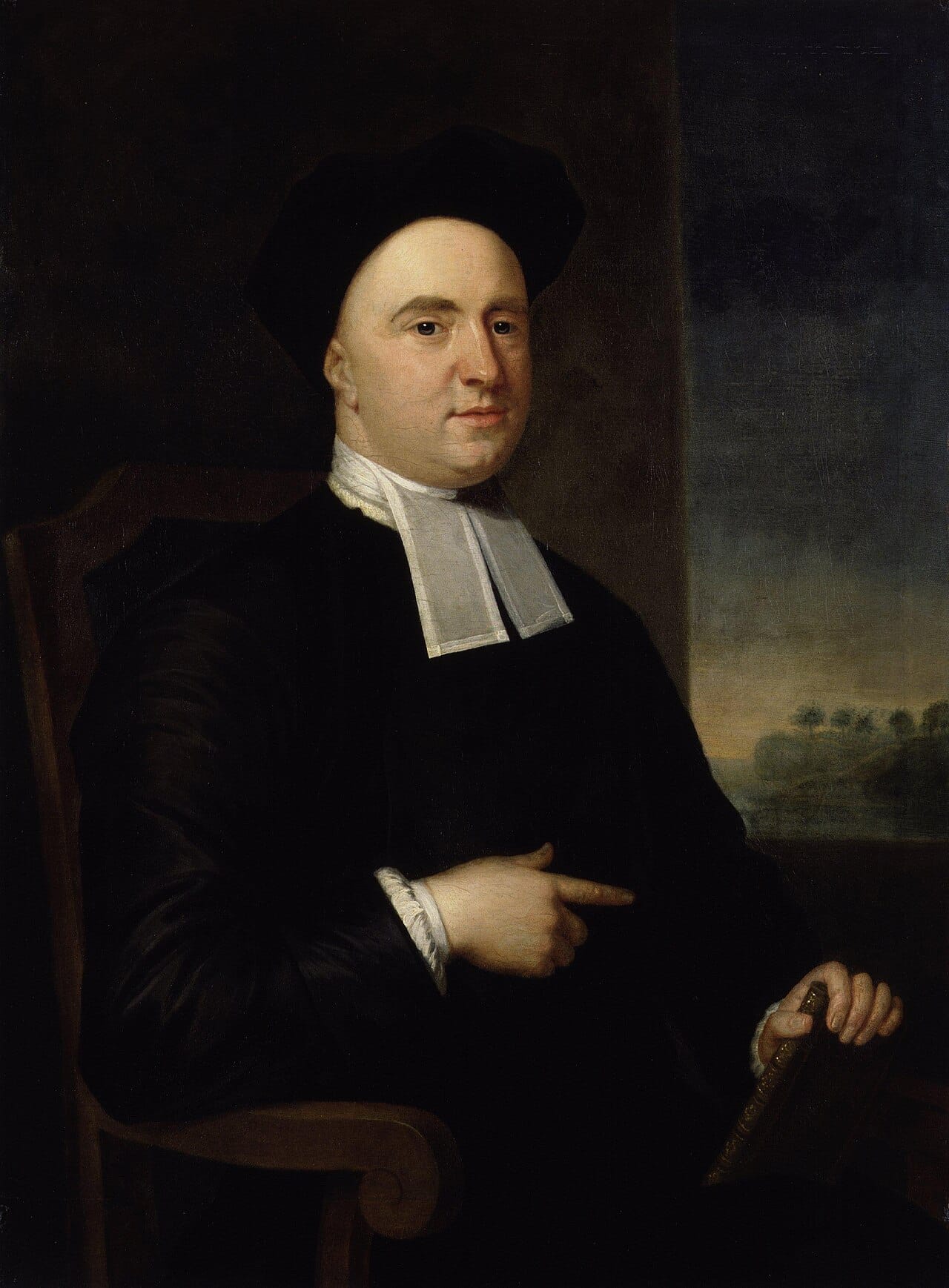
Berkeley argued that sensible objects are collections of ideas perceived by minds. His view is more careful than “nothing exists when I look away”: God supplies continuous perception in his system, so the account does not make ordinary objects blink in and out with each human glance.
In his Treatise Concerning the Principles of Human Knowledge, Berkeley formulates esse est percipi, “to be is to be perceived”, as part of that larger idealist argument.
Berkeley's challenge is epistemic: everything we know about the sensible world reaches us through perception. Realists agree that perception mediates experience but deny that physical existence therefore depends on a human observer.
The tree question is a useful way to expose that disagreement. It is not, by itself, evidence for either side.
What quantum measurement does, and does not, show
Quantum experiments make measurement central, but “observer” is a technical word. It does not ordinarily mean a conscious person watching with their eyes. A detector, measuring device or environmental interaction can register information and alter whether interference is available.
In a double-slit experiment, an interference pattern appears when the paths remain coherent. When which-path information becomes physically available, measurement and decoherence change the pattern. That is a claim about interactions and information, not proof that a mind creates reality.
Some historical interpretations gave consciousness a special role in collapse. Other interpretations do not invoke consciousness, and some do not use collapse at all. The measurement problem remains an interpretive dispute, so it cannot honestly be presented as laboratory confirmation of Berkeley.
For the experiment, see the NIST paper on measurement-induced decoherence. For the range of interpretations, see the Stanford Encyclopedia of Philosophy entries on quantum measurement and consciousness.
The Modern Version: Social Media and the Attention Economy
Here's where this ancient riddle becomes painfully relevant to our lives today.
Because in 2026, we're all living inside the tree-falling question.
Think about it:
- You cook an amazing meal, but you don't post it on Instagram. Did it happen?
- You hit a personal record at the gym, but nobody was there to witness it. Does it count?
- You have a profound realization about your life, but you don't write it down or tell anyone. Did you really learn anything?
We've collectively internalized Berkeley's idealism: existence requires an audience.
Social platforms can make an unshared experience feel incomplete because they reward public reaction. That is a familiar pressure, but it is not evidence that unshared events are less real.
The tree-falling question has become our existential crisis: if nobody witnesses my life, am I really living it?
And here's the kicker: this isn't totally wrong.
⚠️ REALITY CHECK
Ask yourself: How many times this week did you do something amazing but felt like it "didn't count" because you didn't share it?
How many moments did you experience through your phone camera instead of your actual eyes?
You're living inside Berkeley's thought experiment.
The Case for Observation (Why Witnesses Actually Matter)
Look, I'm not saying you need to livestream your entire life to validate your existence.
But there's something real about the role of observation in creating meaning.
Consider:
Sharing an event can help us revisit and interpret it. Whether it improves memory or meaning depends on the event, the listener and the way the story is retold.
Identity is relational. You don't know who you are in a vacuum. You discover yourself through relationships, through how others reflect you back to yourself. The "tree" of your personality only makes a "sound" when it encounters other consciousnesses.
Achievement needs context. Sure, you climbed that mountain. But the meaning of that climb,the story you tell about your strength, your determination,emerges through the telling. Through being witnessed.
So maybe Berkeley was onto something. Maybe reality isn't just "out there" waiting to be discovered. Maybe it's co-created between observer and observed, between consciousness and world.
The Answer (Sort Of)
So, does the tree make a sound?
If sound means physical vibrations: Yes. The tree creates air pressure waves whether anyone hears them or not. Physics doesn't require an audience.
If sound means the experience of hearing: No. Without ears and a brain to process those vibrations, there's no sound as we subjectively know it,just waves in the air.
If sound means something that matters: That depends on what you value.
The tree creates vibrations regardless. The significance a person assigns to that event belongs to interpretation and value, which are different questions from whether the physical event occurred.
Reality might be objective. But our experience of reality is always filtered through perception, interpretation, and meaning-making.
Which means the real question isn't "does the tree make a sound?"
The real question is: who decides what counts as real?
CLICK TO EXPAND: The Full Breakdown,Three Ways to Answer
THE SCIENTIFIC ANSWER:
- Physical vibrations occur regardless of observers
- Sound waves = objective phenomenon
- Measurable with instruments
- Verdict: Yes, it makes a sound (defined as vibrations)
THE PHILOSOPHICAL ANSWER:
- "Sound" requires the experience of hearing
- Experience requires consciousness
- No consciousness = no sound (only vibrations)
- Verdict: No, it doesn't make a sound (defined as experience)
THE PRACTICAL ANSWER:
- Physical reality exists independently
- But meaning is created by consciousness
- Vibrations happen; significance requires witness
- Verdict: Both are true, depending on what you care about
What This Means For Your Life (The Practical Bit)
Okay, enough abstract philosophy. What does this mean for you?
Here are three takeaways from the falling-tree debate:
1. You don't need an audience to be valid.
Your life has meaning independent of whether it's witnessed, liked, or validated by others. That meal you cooked? It was delicious whether Instagram saw it or not. That personal record? It counts because you experienced it.
Stop outsourcing your sense of reality to social media metrics.
2. But selective sharing creates deeper meaning.
There is also value in selective sharing: telling a story to someone who cares can deepen its significance. The point is to choose the relationship, instead of performing every experience for an algorithm.
3. Reality is more collaborative than you think.
You are not a passive observer of your lived experience. Attention, sensory interpretation and the stories you tell affect what an event means to you. That does not imply that a mind creates the physical event.
Your attention and interpretation shape your lived experience. That does not imply that attention creates the physical event.
The Bottom Line
If a tree falls in the forest and no one is around to hear it, does it make a sound?
Maybe. Maybe not. Depends on what you mean by "sound."
But here's what I know for sure: you're not a tree. You're a conscious being capable of observation, interpretation, and meaning-making. And whether or not the universe requires an audience to exist, your life becomes richer when you stop performing for invisible crowds and start being fully present for the moments that matter.
Berkeley's useful pressure point is that perception shapes experience. That does not show that a human mind manufactures the physical world.
So the practical question is not whether attention makes an event real. It is what you choose to notice and how you interpret what has already occurred.
The tree creates pressure waves. A listener creates the experience of hearing. Your task is to decide what deserves your attention.
That distinction is less mystical than the old riddle sounds, and more useful.
Put what you're reading into practice. Join the free 7-Day Stoic Challenge for one practical lesson and exercise each day.