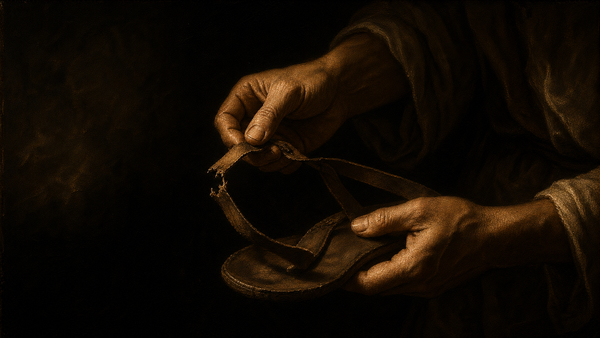
This is my breakdown of Chapter 5 of Epictetus' handbook.
Here, Epictetus reminds us of the cardinal rule of Stoic philosophy: it is not events that disturb us, but our opinions of them.
While this idea seems simple, if you take it seriously and make an effort to view your experience through this framework, you will make a huge leap towards inner tranquillity and even develop freedom from the fear of death.
I/ The Causal Chain of Emotion
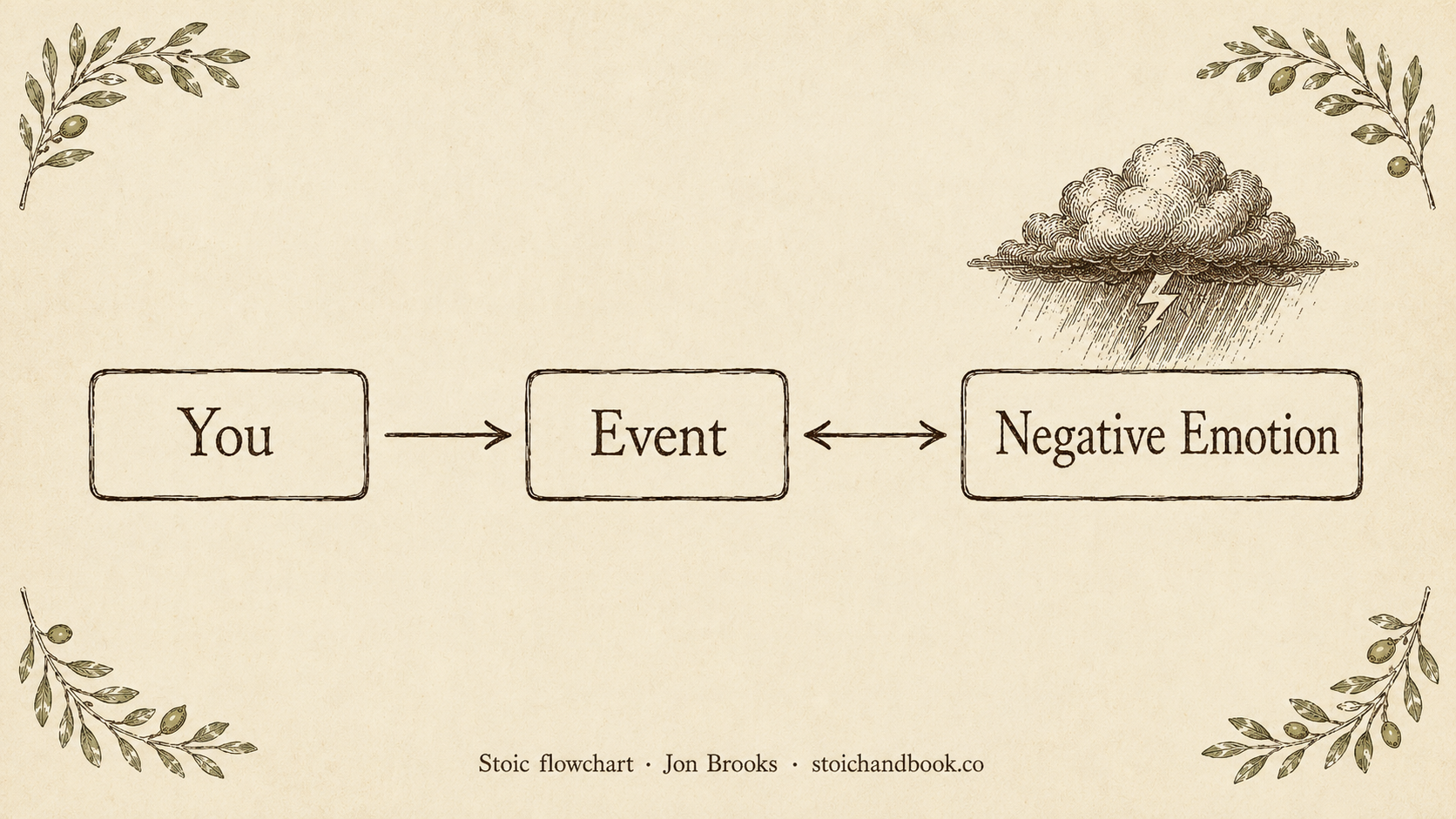
It is not accurate to say, “An event is disturbing or bad.”
Incorrect view:
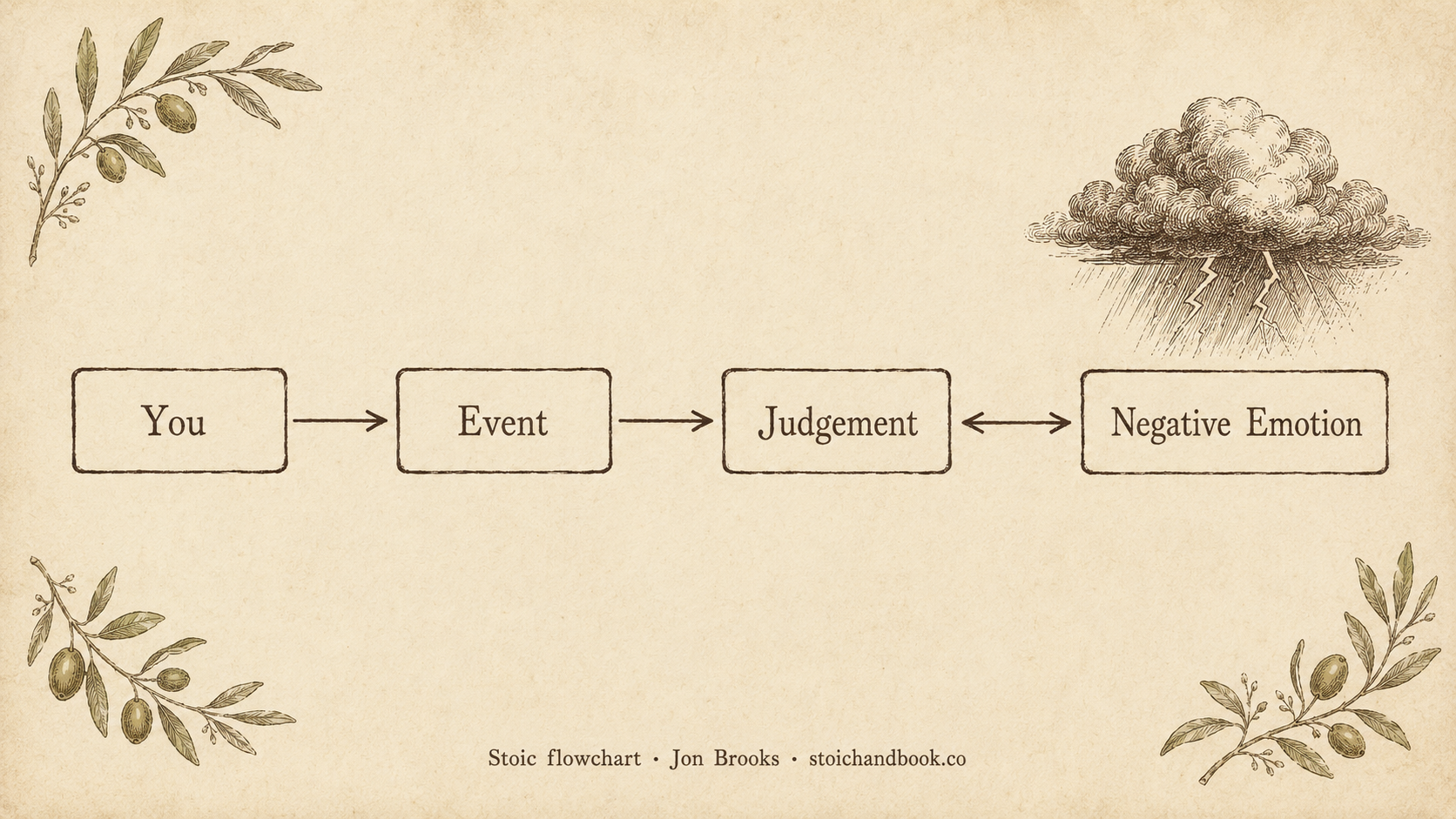
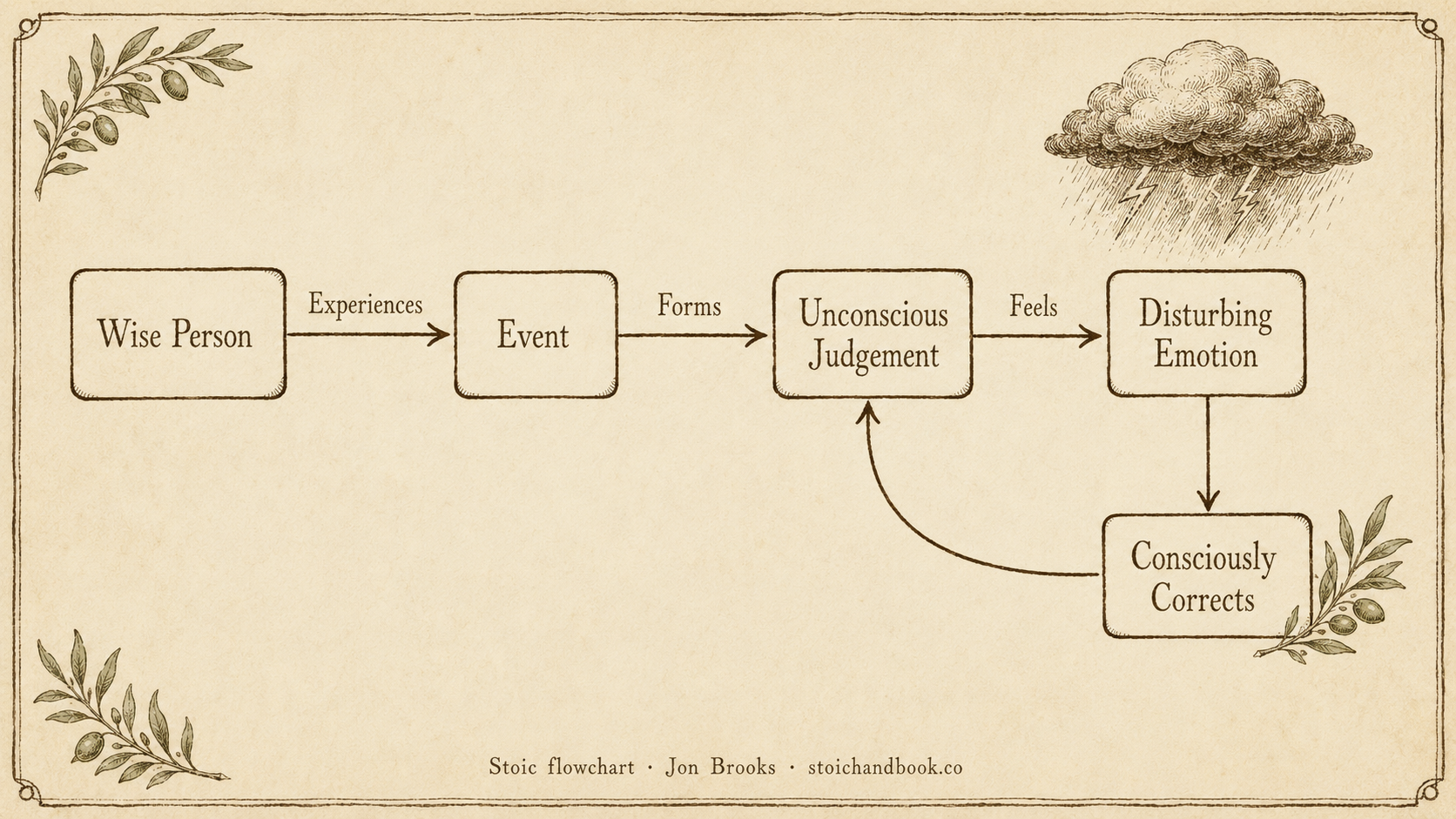
Whenever someone gets upset, the cause is their judgement about the event, not the event itself.
Correct view:
For example, most people have a fear of death. But we see that the wisest people who ever lived, like Socrates, had freedom from the fear of death:
“To fear death, my friends, is only to think ourselves wise, without being wise: for it is to think that we know what we do not know. For anything that men can tell, death may be the greatest good that can happen to them: but they fear it as if they knew quite well that it was the greatest of evils. And what is this but that shameful ignorance of thinking that we know what we do not know?”
This proves it’s our judgement about death that is scary, not the event of death itself.
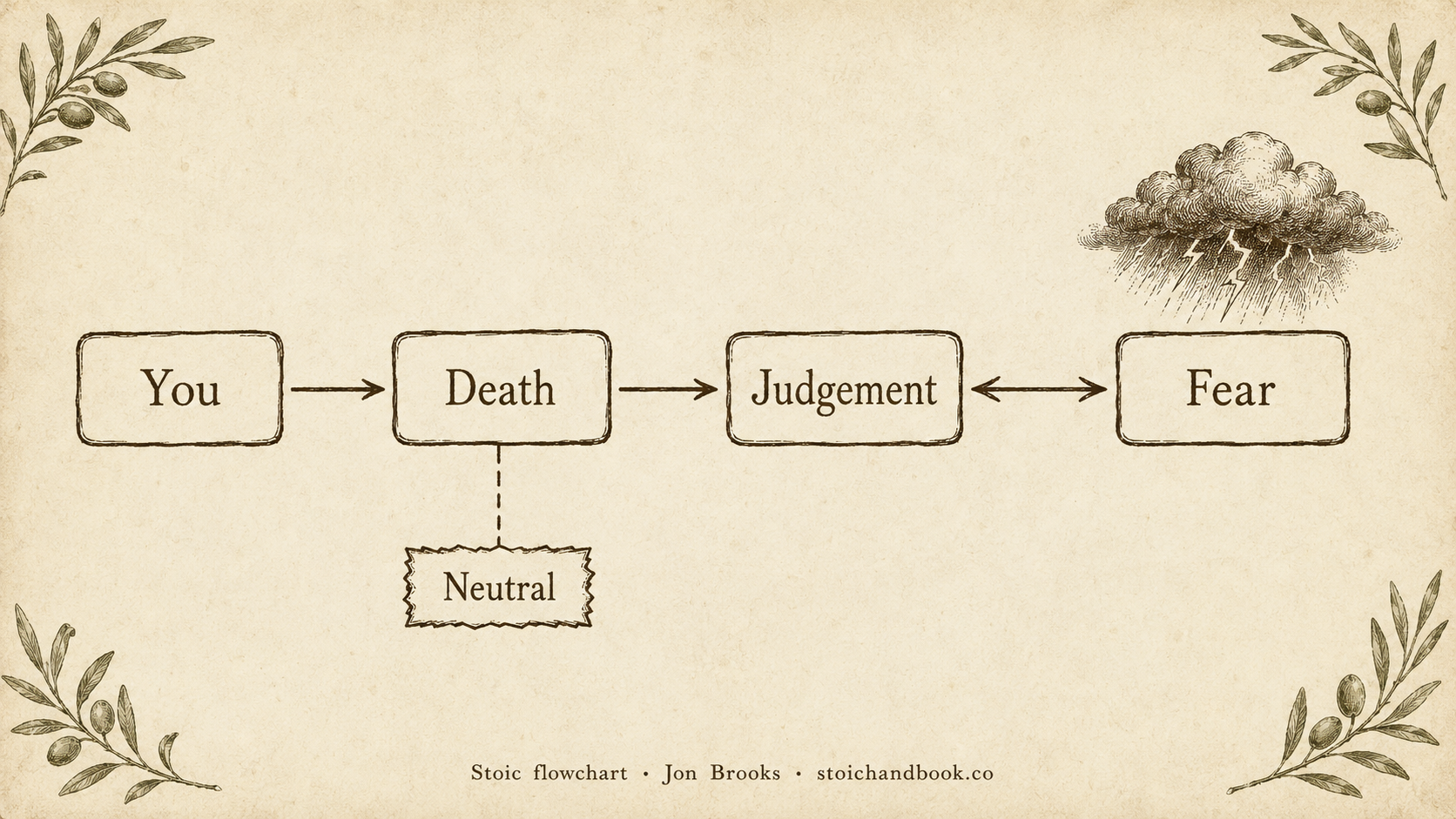
If you looked at how the unwise person thinks about death, it is no surprise that they are frightened. They choose to believe their inaccurate and terrifying story.
This model applies to the fear of death, but also to other events and emotions, which include frustration, anger, and unhappiness.
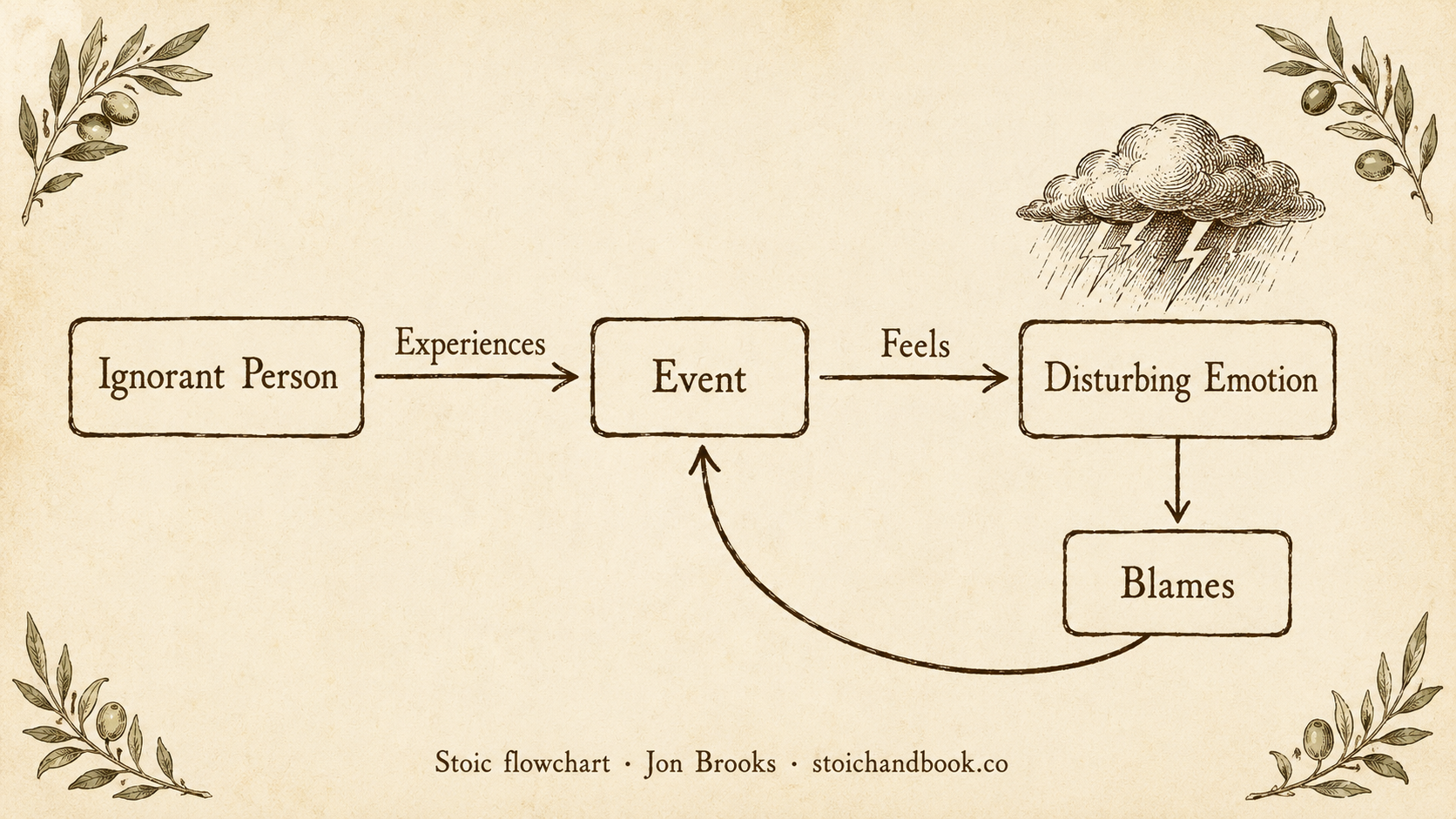
The wise Stoic understands that unpleasant emotions are not caused by other people or the world; instead, it is their own judgements that disturb them.
II/ The 3 Levels of Wise Interpretation
- Ignorant person: Blames others and the world for their misery.
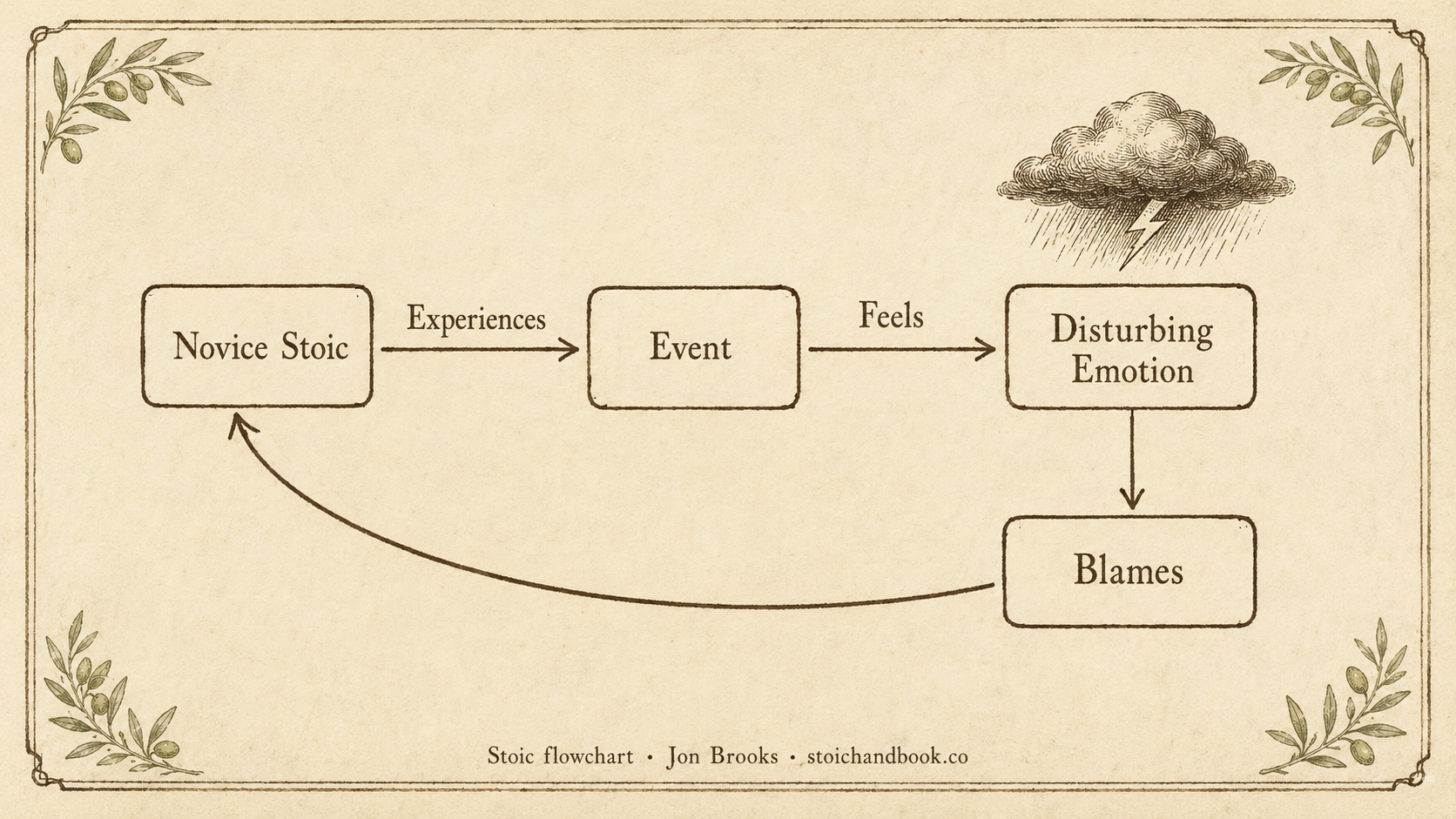
- Stoic-in-training: Blames oneself for his misery.
- The Wise Person: Never needs to blame themselves or others for his misery but examines and corrects their initial judgement.
ENCHIRIDION CHAPTER FIVE, EPICTETUS, TRANSLATION BY ROBERT DOBBIN:
It is not events that disturb people, it is their judgements concerning them. Death, for example, is nothing frightening, otherwise it would have frightened Socrates. But the judgement that death is frightening – now, that is something to be afraid of. So when we are frustrated, angry or unhappy, never hold anyone except ourselves – that is, our judgements – accountable. An ignorant person is inclined to blame others for his own misfortune. To blame oneself is proof of progress. But the wise man never has to blame another or himself.