Seneca thought hardship was worth something. A person who has already been tested knows what they can take, and that knowledge changes how the next difficulty lands. Here is the passage that argument rests on, and three ways to put it to work.
Seneca’s Wisdom on Adversity
The passage comes from his thirteenth letter to Lucilius:
"No prizefighter can go with high spirits into the strife if he has never been beaten black and blue; the only contestant who can confidently enter the lists is the man who has seen his own blood, who has felt his teeth rattle beneath his opponent’s fist, who has been tripped and felt the full force of his adversary’s charge, who has been downed in body but not in spirit, one who, as often as he falls, rises again with greater defiance than ever."
Seneca, Moral Letters to Lucilius 13.2, translated by Richard Mott Gummere.
This sits close to the heart of Stoic philosophy: difficulty is survivable, and it is part of what makes a person stronger. Seneca is describing the boxing ring, but he means it about ordinary life too.
Turning Adversity Into Strength
So how do you use it? Three things follow from Seneca’s argument, and each one is a way to transform your perspective.
1. Embrace Challenges as Growth Opportunities
Think of a time life knocked you down. A job that ended, a relationship that fell apart, a failure you did not see coming. Hard as those months were, did they leave you stronger? Did you learn anything you have used since?
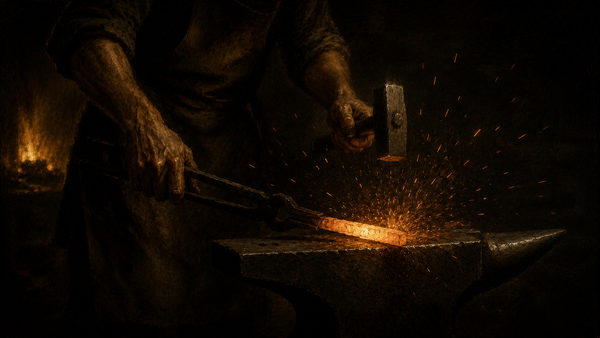
Seneca’s claim is that difficulty is the forge where our greatest strengths get made. So meet it squarely, on the understanding that the struggle is preparing you for something greater.
2. Practise Reflection and Gratitude in Difficult Times
In the middle of something hard, all the attention goes to what is going wrong. Stop and look back, though, and you may find the difficulty has already made you a better person.
Gratitude does real work here. Look back at your worst stretches and you can usually trace what they built: the character you needed later, and the preparation for what came next.
3. Develop Resilience Through Stoic Virtue
In Stoicism, resilience is a form of virtue. Courage when you are afraid. Patience when you are frustrated. Perseverance when the whole thing looks like it is coming apart. Next time you are up against something, treat it as a chance to practise fortitude and endurance.
🎧 Listen to the Full Podcast Episode
In this episode I go through Seneca’s argument in more depth and talk about how to put this Stoic mindset to work day to day.
Applying Seneca’s Teachings Today
Three things you can do today.
- Reflect: think back to a serious challenge you have faced. How did it shape you? What did it bring out in you?
- Be grateful: instead of dreading difficulty, notice what it offers. It is your chance to become more resilient.
- Act with virtue: big or small, every challenge is a chance to show patience, courage and endurance.
Transform Adversity into Strength
What Stoicism does well is turn hardship into something you can use. Take the difficulty on and you come out stronger, and better able to handle what comes next.
So next time you are knocked down, remember Seneca’s fighter, and get up with more defiance than before.
Work these principles against your own history and the case starts to make itself. Difficulty is something you can use.