The Reset is a short Stoic practice for the moment after you have snapped or started spiralling. Drawing on Marcus Aurelius, this episode uses a modern memory aid: Stop, Pause, Question, Reframe. Take one breath, check the story you are telling yourself, and return to what is yours to do.
Come back after the lapse
You have already snapped. Now you are replaying it, and the rest of the day is beginning to look like a write-off. That is the moment this practice is for.
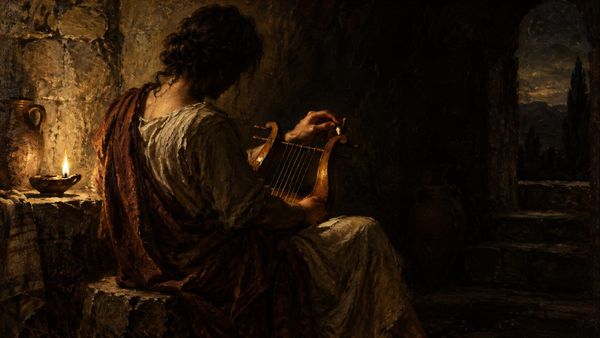
In Meditations 6.11, Marcus tells himself to return when circumstances have disturbed him. He expects to lose his balance. The work is to notice and return, repeatedly. The episode uses a musician retuning an instrument to make that instruction concrete.
Run the Reset once
SPQR is my own shorthand for applying Stoic ideas. Marcus did not prescribe this four-step formula.
- Stop. Interrupt what you are doing for a moment.
- Pause. Take one comfortable breath and feel your feet on the floor.
- Question. What am I telling myself about this right now?
- Reframe. What is actually here? What is up to me? What can I do next?
The question is small enough to use while you are still annoyed. You do not have to force a different feeling before considering your next response.
Count the return
Try the Reset once today, when you notice that you have been carried off. Tonight, ask the question from the recording: did I come back to this once?
The episode describes each return as a rep. Treat that as a way of practising, rather than a promise that every attempt will feel easier or make the disturbance disappear. The immediate task is to return to the situation and consider your part in it.
For the distinction behind the final step, read the dichotomy of control. The guide to Marcus Aurelius’ Meditations places this instruction within his wider practice.
Sources: Marcus Aurelius, Meditations, Book Six, section 11, translated by George Long. The SPQR memory aid is Jon Brooks’ modern application.
Full transcript
Lightly edited for readability.
You've already lost it. You've snapped at someone, or you've been arguing with an email in your head for twenty minutes. Then most of us add a second problem. We take the lapse that we've had as proof that our day is now officially ruined, and then we stay out of tune with ourselves until bedtime.
This is One Passage. In another talk, I discussed the Flinch, naming the first jolt in your body. Today is what you do once it's already carried you off.
Here's Marcus Aurelius, Book Six, Section eleven. George Long's translation. When thou hast been compelled by circumstances to be disturbed in a manner, quickly return to thyself, and do not continue out of tune longer than the compulsion lasts, for thou wilt have more mastery over the harmony by continually recurring to it.
Look at what he expects: to be disturbed. This is a man with years of practice and an empire to run, and he still assumes that he will be knocked out of tune. His instruction is simply to come back quickly. And the last line is the training point. Mastery comes from continually recurring, returning, over and over again.
Think of a musician. They don't stay in tune by never drifting. They notice the drift and then retune again and again, and each retune makes the next one quicker. So every time you come back, that is the rep. The lapse is where the practice happens. This is the gap again, the step between what happens and what you do next, except now you're reopening it after it has closed.
The practice is called the Reset. I use four letters as the handle. SPQR. That's my own shorthand, not an ancient formula, but each step comes straight from the Stoics.
S stands for stop. Just stop whatever you're doing right here, right now, for just a moment.
P stands for pause. Take one slow breath. Feel your feet on the floor, be mindful.
Q stands for question. What am I telling myself about this right now?
And R stands for reframe. What is actually here? What is up to me? What is within my control? And does this really matter?
The trigger is the moment that you notice that you're out of tune. You've snapped or you're spiralling, or you've been ranting in your head. The instruction is this: run the reset once. It takes less than a minute. And today's rep is one reset. Put a mark next to yesterday's tick. Tonight, one question. Did I come back to this once? Yes or no?
Marcus didn't plan on staying in tune at all times. His plan was to come back when he was out of tune, and that's the whole skill. And it grows stronger and stronger with every rep that you do. SPQR. Stop, pause, question, reframe. Try and get one rep today. Go well.
Go deeper
If you want structured practice, the 7-Day Stoic Challenge is free. Nine audio lessons and a 42-page workbook.