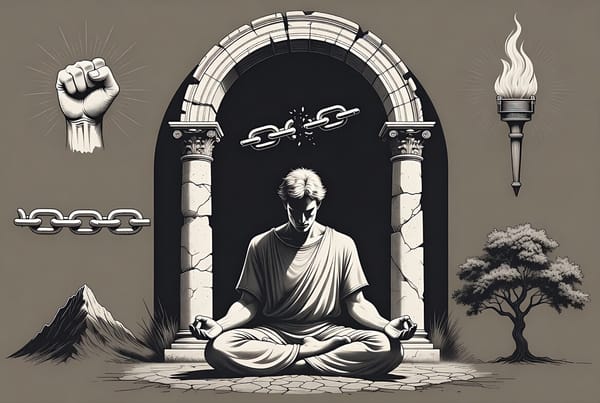
A guided meditation on loss, resilience, and why imagining the worst might be the key to appreciating what you have
I used to walk right past my legs.
Not literally—obviously I used them. I walked, ran, hiked, danced (badly), and paced around my apartment while thinking. But I never appreciated them. They were just... there. Invisible. Assumed.
Until I spent six months watching my best friend hobble around on crutches after a motorcycle accident.
Watching him struggle with stairs, with showers, with the humiliation of needing help to do basic things—it cracked something open in me. Not pity. Recognition.
I had been sleepwalking through my own good fortune.
And the Stoics knew this about human nature 2,000 years ago.
Why We Don't Appreciate What We Have (Until It's Gone)
There's a psychological phenomenon called hedonic adaptation—the tendency for humans to return to a baseline level of happiness regardless of positive changes in their lives.
You get the promotion? Thrilling... for two weeks. Then it's normal.
You move into your dream apartment? Amazing... until it's just where you live.
You're healthy, mobile, free? Completely invisible—until you're not.
The Stoics understood this. They knew that the good life isn't found in acquiring more—it's found in wanting what you already have.
But how do you do that when your brain is wired to take everything for granted?
Enter: praemeditatio malorum—the premeditation of adversity.
What Is the Premeditation of Adversity?
The premeditation of adversity is an ancient Stoic mental exercise where you vividly imagine losing something you value—your health, your freedom, a loved one, your possessions—not to torture yourself, but to:
- Prepare for uncertainty (because loss is inevitable)
- Train yourself to respond with virtue when hardship strikes
- Cultivate gratitude by realizing what you have right now
Marcus Aurelius, the Roman Emperor and Stoic philosopher, practiced this daily. In his Meditations, he wrote:
"When you wake up in the morning, tell yourself: The people I deal with today will be meddling, ungrateful, arrogant, dishonest, jealous, and surly... But I have seen the beauty of good, and the ugliness of evil, and have recognized that the wrongdoer has a nature related to my own."
He wasn't being pessimistic. He was mentally preparing so he wouldn't be blindsided.
Seneca took it further. He recommended imagining poverty, exile, and death—not to live in fear, but to strip away the illusion of permanence that makes us complacent.
"He robs present ills of their power who has perceived their coming beforehand." — Seneca, Letters to Lucilius
This practice isn't about being morbid. It's about waking up.
Why I Created This Guided Meditation
For years, I read about the premeditation of adversity. I understood it intellectually. But I didn't feel it.
Then I tried something different.
I closed my eyes and imagined—really imagined—a car crash. Not abstractly. Viscerally. The crunch of metal. The panic. The hospital. The diagnosis: six months in a cast.
And suddenly, my legs weren't invisible anymore.
The simple act of walking to the kitchen felt like a goddamn miracle.
That's when I realized: this practice works best when it's embodied, not intellectual.
So I created this guided meditation to help you experience it the way I did—not as a thought experiment, but as a felt, transformative practice.
What You'll Experience in This Meditation
This 12-minute guided practice takes you through:
- Grounding in the present moment (noticing how effortless life is right now)
- A vivid scenario of sudden loss (a car accident that changes everything)
- Exploring the ripple effects (how a broken leg affects everything—work, relationships, daily tasks)
- Stoic reflection (What virtues would you draw on? How would you cope?)
- The relief of reality (Appreciating what you still have)
- Three key benefits of this practice for your life
It's intense. It's emotional. And it works.
Listen to the Full Guided Meditation
Find a quiet space. Close your eyes. And let's practice together.
The Three Ways This Practice Changes You
If you practice this regularly—even once a month—it rewires how you relate to life.
1. It Prepares You for Uncertainty
Life is fragile. Accidents happen. People leave. Health declines. Jobs end.
The premeditation of adversity doesn't prevent these things—but it prepares you mentally so you're not blindsided when they occur.
As Seneca wrote:
"What is quite unlooked for is more crushing in its effect, and unexpectedness adds to the weight of a disaster."
When you've already imagined loss, you respond with resilience, not panic.
2. It Trains You to Practice Virtue Under Pressure
The Stoics believed the good life wasn't about comfort—it was about acting with virtue (courage, wisdom, justice, self-discipline) regardless of circumstances.
This meditation asks: How would you cope? What virtues would you draw on?
By rehearsing this mentally, you're training yourself to respond with grace when life actually gets hard.
You're not cultivating toxic positivity or "good vibes only." You're cultivating strength.
3. It Teaches You to Want What You Already Have
This is the heart of Stoic gratitude.
Most people spend their lives chasing more—more money, more success, more stuff—thinking that's what will make them happy.
But the Stoics knew: the secret to contentment is wanting what you already have.
Epictetus put it simply:
"He is a wise man who does not grieve for the things which he has not, but rejoices for those which he has."
When you imagine losing your legs, your freedom, your loved ones—and then realize you still have them—gratitude isn't a concept. It's a felt experience.
You don't need to acquire anything. You just need to wake up.
How to Practice This Meditation
Frequency: Once a week or once a month is enough. You don't want to overdo it.
Context: This works best when you're feeling complacent, entitled, or caught in the "I'll be happy when..." trap.
After the meditation: Journal on these prompts:
- What did I realize I take for granted?
- How would I cope if I lost this?
- What can I appreciate right now?
A Final Word: This Isn't Pessimism. It's Realism.
Some people hear "imagine the worst" and think it's negative thinking.
It's not.
Pessimism says: "Everything will go wrong, so why bother?"
Stoic realism says: "Everything could go wrong, so let's prepare—and also appreciate what's going well right now."
The premeditation of adversity doesn't make you paranoid. It makes you present.
It doesn't make you fearful. It makes you grateful.
And it doesn't make you weak. It makes you resilient.
Marcus Aurelius, one of the most powerful men in history, practiced this daily. Not because he was pessimistic, but because he understood:
The good life isn't about avoiding loss. It's about appreciating what you have while you have it.
Try the Meditation and Let Me Know
I'd love to hear how this practice lands for you.
Does it shift your perspective? Does it feel uncomfortable? Does it create space for gratitude you didn't expect?
Drop a comment below or share this with someone who needs a reminder to appreciate what they have.
And if you want to go deeper into Stoic practices for modern life, subscribe to my newsletter at HighExistence.com—I share weekly essays, exercises, and tools for resilience, meaning, and growth.
Thanks for practicing with me.