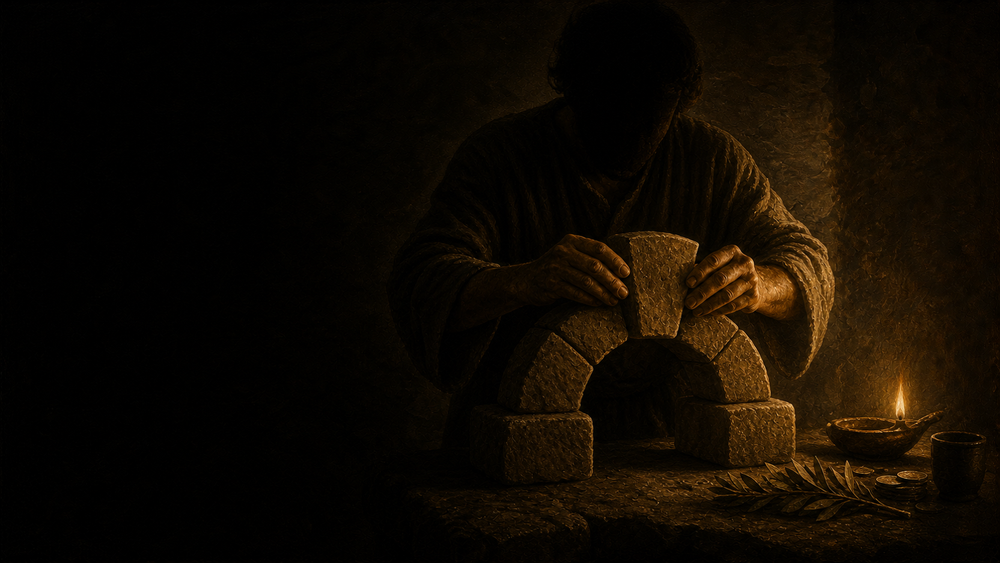
Eudaimonia means living well or flourishing across a life. It does not simply mean feeling happy.
The word names the highest human good in much of ancient Greek ethics. Aristotle used it. The Stoics used it. The Epicureans worked within the same broad question. They did not agree about what makes a life go well.
That disagreement is the interesting part.
- Greek: εὐδαιμονία
- Rough English pronunciation: yoo-dye-MOH-nee-uh
- Useful translations: flourishing, fulfilment, the well-lived life
- Misleading shortcut: a cheerful mood
- Stoic claim: virtue is necessary and sufficient for eudaimonia
If you translate the word as “happiness”, keep the older sense of a life going well. Otherwise it is too easy to turn ancient ethics into mood management.
This page is one child in the wider guide to essential Stoic terms. It stays with the meaning of eudaimonia and the dispute that gives the word its force.
Eudaimonia is a verdict on a life
I can feel good while doing something cowardly. I can feel awful while doing something decent and necessary.
That alone shows why mood cannot settle the question.
Eudaimonia asks about the shape and quality of a life: how well a person is using the capacities that make them human, what their choices express, and whether their way of living hangs together.
The word is often broken into eu (“good” or “well”) and daimōn (“spirit” or guiding power). Marcus Aurelius plays with that connection in Meditations 7.17. The word history is suggestive, but it is not a full definition. You cannot derive the ethical theories of Aristotle and the Stoics from two syllables.
“Flourishing” is usually the least bad one-word translation. It keeps the focus on functioning and development rather than a passing feeling. Even that can sound too botanical and comfortable. A life may contain grief, pain and failure while still containing excellent choices.
Aristotle did not invent eudaimonia
Aristotle is the philosopher most closely associated with the term online. He did not invent the Greek concern with living well, and eudaimonia is not exclusively Aristotelian.
In Book I of the Nicomachean Ethics, Aristotle asks what we choose for its own sake rather than as a means to something else. Money is useful for something else. Honour depends too much on the people giving it. Pleasure does not by itself explain an excellent human life.
His answer is eudaimonia: the final and self-sufficient end of action.
Aristotle then gives his famous function argument. If the distinctive human capacity is rational activity, the human good involves exercising that capacity well. He describes it as activity of the soul in accordance with virtue, across a complete life.
The “complete life” matters. One good afternoon does not make a flourishing person. Aristotle's own image is that one swallow does not make a summer.
He also thinks external conditions matter. Friends, health, resources and political opportunity can help a person perform noble actions. Severe deprivation can damage a life. Character is central, but it is not the only ingredient.
The Stoics raised the stakes
The Stoics accept the shared question and give a more radical answer.
For them, eudaimonia is a life in agreement with nature. “Nature” here does not mean taking a walk in the woods. Human beings are rational and social animals. To live according to our nature is to develop reason, act justly with other people and bring our choices into a coherent shape.
The Stanford Encyclopedia of Philosophy summarises the structure clearly: eudaimonia is the ultimate practical end; living in agreement with nature specifies that end; virtue is what is necessary and sufficient to achieve it.
That last word is where Stoicism stops being comfortable.
The Stoics do not say virtue usually helps you flourish. They say virtue is enough.
Wisdom, justice, courage and temperance are not tools for producing the real prize of status, comfort or success. The quality of reason and character is the good. Everything else belongs to the circumstances in which character operates.
The full guide to the four Stoic virtues develops what the Stoics meant by virtue. The shorter version is that a good life cannot be built by using wisdom unjustly, courage recklessly or self-control selfishly. The virtues form one account of excellent practical judgement.
Aristotle and the Stoics: the difference
Both approaches make virtue central. They disagree about whether virtue can carry the whole weight.
| Question | Aristotle | Mainstream Stoics |
|---|---|---|
| What is eudaimonia? | Excellent rational activity across a complete life | A well-lived life in agreement with nature and reason |
| Is virtue necessary? | Yes | Yes |
| Is virtue sufficient by itself? | Not normally; external goods also matter | Yes |
| Do health, friendship and resources affect flourishing? | They can contribute to it | They are rationally preferred but do not constitute it |
| Can catastrophe reduce eudaimonia? | Yes, at least in severe cases | Not if virtue remains intact |
This is not a minor technical difference. It changes where you locate the success of a life.
Aristotle leaves part of flourishing exposed to fortune. The Stoics try to place the good entirely in the quality of agency. That gives the Stoic position its resilience and its hardest problem.
“Indifferent” does not mean worthless
If health, friendship and safety do not constitute eudaimonia, should a Stoic stop caring about them?
No.
Cicero's account of Stoic ethics in De Finibus III says that external things are not all equal in ordinary choice. Health is usually preferable to illness. Security is usually preferable to danger. Resources can help you fulfil responsibilities to other people.
The Stoics call these “preferred indifferents”. The phrase is awkward because indifferent sounds like I do not care.
It means something narrower: the thing does not by itself make your character good or your life morally successful.
Money can be used generously or viciously. Reputation can follow decent work or careful deception. Pain can accompany cruelty or courage. The external condition does not tell you how well the person is choosing.
So the Stoic still visits the doctor, protects a child and works to repair a friendship. The difference is that success is not measured only by whether the preferred outcome arrives. The Stoic idea of prohairesis puts the quality of judgement and choice at the centre without pretending you control the result.
The problem of the happy person on the rack
The Stoic claim sounds strongest when life is merely inconvenient. It sounds most strained when life is catastrophic.
Cicero reports the orthodox consequence without softening it: if pain is not an evil and virtue is sufficient, the wise person retains eudaimonia even under torture. The current SEP entry describes this as the claim that the virtuous person remains maximally happy on the rack.
Technically, the reply is coherent. The Stoics are not saying torture feels pleasant. They are saying pain can damage the body without turning a just choice into an unjust one. Eudaimonia is located in the excellent use of reason, not in comfort.
But the objection remains serious. If you tell a grieving parent that their flourishing is untouched, you may be consistent inside the system and cruel in the room.
I do not think this tension should be tidied away. The Stoic view protects something important: catastrophe does not have final authority over character. It can still wound a life profoundly. “Virtue is sufficient” is the ancient doctrine. Whether that is an adequate account of flourishing is a question a serious reader is allowed to keep open.
This is one reason apatheia does not mean emotional numbness. The Stoic thesis concerns what makes a life good, not whether the body hurts or grief arrives.
Eudaimonia is not a self-help feeling
Modern wellbeing language sometimes uses eudaimonic to contrast meaning, growth or purpose with pleasure. That can be useful, but it is not a clean restatement of Stoicism.
The ancient claim is ethical before it is psychological. It asks what is worth choosing and what kind of person one should become. Feeling purposeful is not enough. A person can find deep meaning in a cruel project.
For the Stoics, reason is also social. Justice is not an optional extra added after personal optimisation. A life cannot count as excellent if it treats other people as tools.
That is the correction worth carrying into modern use. Eudaimonia is not “the life that feels most fulfilling to me”. It is an argument about what makes a human life genuinely good.
A practical eudaimonia check
The term becomes useful when it changes the question you ask.
Pick one decision that matters this week. Then write three answers:
- Pleasure: What option feels best immediately?
- Outcome: What result am I trying to secure?
- Character: What would wisdom, justice, courage and temperance require in how I choose and act?
Do not pretend the outcome is irrelevant. Health, money, deadlines and relationships are real material for a decision.
Then separate the target from the standard.
- The target is the preferred result you will work towards.
- The standard is the quality of judgement and action you refuse to trade away to get it.
That is a small version of the Stoic move. Pursue what is reasonably preferable. Do not let obtaining it become the price of your character.
The free 7-Day Stoic Challenge is a practical next step if you want to test that distinction in ordinary decisions rather than collect another Greek word.
Sources and research trail
- Aristotle, Nicomachean Ethics, Book I, especially chapters 7–8 on rational activity, a complete life and external goods.
- Diogenes Laertius, Lives of Eminent Philosophers, Book VII, on living according to nature, virtue, value and indifferents.
- Cicero, De Finibus, Book III, on the Stoic end, the tortured sage and preferred indifferents.
- Stanford Encyclopedia of Philosophy, “Stoicism”, §§4.1–4.3.
- Marcus Aurelius, Meditations 7.17, on the “good daimōn” wordplay.
I also used five records from my internal Stoic Codex to map the term, the virtue-sufficiency dispute and the catastrophe objection, then checked the public claims against the sources above. The Codex is a research map, not a substitute for a source readers can inspect.
Frequently asked questions
What does eudaimonia mean?
Eudaimonia means living well or flourishing across a life. It concerns the quality and shape of a life, not simply a pleasant mood.
How do you pronounce eudaimonia?
A rough English pronunciation is yoo-dye-MOH-nee-uh. Ancient and modern Greek pronunciation differs, so treat this as an English reading guide.
Is eudaimonia the same as happiness?
It is often translated as happiness, but modern English makes that sound too emotional and temporary. “Flourishing”, “fulfilment” or “the well-lived life” usually preserves the philosophical meaning better.
Did Aristotle invent eudaimonia?
No. The question of how to live well was shared across ancient Greek ethics. Aristotle gave one enormously influential account; Stoics, Epicureans and other schools gave different answers.
What is eudaimonia in Stoicism?
It is the flourishing life achieved by living in agreement with nature and reason. Mainstream Stoics argue that virtue is necessary and sufficient for it.
What is the difference between Aristotle and the Stoics on eudaimonia?
Aristotle makes virtuous rational activity central but gives external goods a role in flourishing. The Stoics argue that virtue is sufficient, while health, wealth and reputation are preferred or dispreferred circumstances rather than parts of the good itself.
Is pleasure part of eudaimonia?
Pleasure may accompany a good life, but neither Aristotle nor the Stoics reduces eudaimonia to a pleasant feeling. The Stoics make virtue, not pleasure, the constituent of flourishing.